


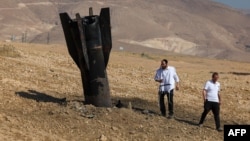
US President Donald Trump has urged Iran and Israel to de-escalate tensions as the two countries have exchanged air strikes over the past 24 hours.
Writing on his social media platform Truth Social, Trump said simply: "Israel and Iran must immediately stop 'shooting.'"
Trump had earlier warned against the resumption of retaliatory attacks, telling an Axios reporter on June 7 that he planned to tell Israeli Prime Minister Benjamin Netanyahu to refrain from retaliating against an Iranian missile barrage as the fragile cease-fire in the Middle East appeared to be in danger.
The Israel Defense Forces (IDF) reported several waves of Iranian missile attacks on Israeli territory early on June 8.
"Defense systems are operating to intercept the threat," the IDF said in a post on X.
The Israeli military also confirmed that its air force struck several targets in the petrochemical complex in Mahshahr, southwestern Iran, on June 8.
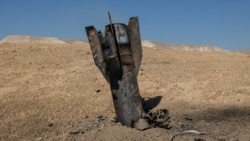

"The Israeli Air Force struck military targets belonging to the Iranian terror regime in western and central Iran a short while ago," the IDF wrote on X.
Iranian media reported that a strike on the Karun Petrochemical Company in Mahshahr had caused damage to parts of the facility.
Iranian state TV said explosions were heard in cities across the country, including Tehran, Karaj, Tabriz, and Isfahan.
The strikes come after Iran fired a barrage of missiles toward Israel in its first attacks on the country since a shaky cease-fire took effect on April 8 between Tehran and Washington, saying it was in retaliation for Tel Aviv's military strikes on Beirut.
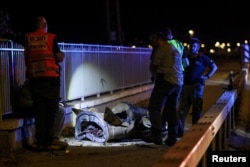
Despite Iran's action, Trump had said a deal with Tehran to turn a cease-fire into a peace settlement was still "very close," adding he did not want Iran's missile strikes on Israel to sabotage the peace process.
Trump told Fox News on June 7 that he was "not happy" about Israel's attacks on Lebanon before being quoted by media outlet Axios that the Iranian strikes "didn't hit anyone. I hope Israel doesn't respond."
"I am going to call Bibi right now and tell him not to retaliate," Trump was quoted as telling Axios reporter Barak Ravid in a phone interview, using the Israeli leader's nickname.
"Israel had its strike and Iran had its strike. We don't need another one," Trump said, according to Ravid.
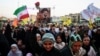
"We're very close. I would say an agreement would be signed on Monday, Tuesday, or Wednesday of this coming week. And now this takes place," Trump told Fox, adding Iran needs to "get back to the table and make a deal."
Trump later told The Financial Times that the latest Iranian strikes would not impact current negotiations with Tehran and that "the deal is going on."
The White House did not respond to requests for comment on the latest strikes or whether they were carried out in coordination with the United States.
Luke Coffey, a senior fellow at the Hudson Institute focusing on national security, said the latest escalation between Iran and Israel "perhaps is the clearest indication yet that we are nowhere close to a long-lasting peace settlement with Iran."
"It is also a reminder that Israel will do whatever it believes is necessary to defend its national interests, even if that means going against the reported wishes of the US president," he told RFE/RL.
IRGC Confirms Attack
Iran's Islamic Revolutionary Guards Corps (IRGC) confirmed it had launched missiles toward Israel on June 7, saying they were in retaliation for Israeli attacks on Lebanon earlier in the day.
It added that "more crushing and regretful blows" would follow if Tel Aviv continues its offensive in Lebanon.
While talks between the United States and Iran to end the war in the Middle East have appeared to stall over key issues such as the reopening of the Strait of Hormuz and Tehran's nuclear ambitions, Iranian officials have maintained that the conflict between Israel and Lebanon is also central to efforts to end the regional war.
The IRGC said it hit the Ramat David airbase southeast of Haifa with ballistic missiles. Israel has not confirmed the specific site of the attack.
The IDF said Tehran "committed a grave mistake" by firing the missiles.
Israel has been launching strikes targeting militants in Lebanon from Hezbollah since March 2, two days after the start of the US-Israeli war with Iran, when Hezbollah forces opened fire in support of Tehran.
Hezbollah -- which has been labeled a terrorist organization by Washington, while the EU has only blacklisted its armed wing -- is a militant group and political party that controls much of southern Lebanon.

