


Iran and the United States held indirect talks in the Gulf state of Qatar on July 1 as the foes pushed forward in negotiations aimed at reaching a lasting deal to end months of war.
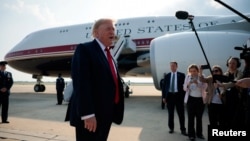
US President Donald Trump told reporters that “very good meetings” were held in the capital, Doha, and that the “denuclearization of Iran is moving along well.”
Iran’s Deputy Foreign Minister Kazem Qaribabadi, who headed a delegation from Tehran, said the sides agreed “a communication channel would be established by tomorrow” to report and record violations of a memorandum of understanding (MOU) signed by Tehran and Washington last month.

The interim deal envisions a path to a final agreement to end the conflict in the region. It provides for waiving US oil sanctions on Iran, while tying the end of wider sanctions and the release of frozen Iranian assets to Tehran's implementation of commitments, such as "down-blending" its stocks of highly enriched uranium under international supervision.
Qaribabadi said that technical groups had been formed in Doha to follow up on the MOU and negotiate a final agreement, but talks in that format had not yet begun.
The diplomatic push followed recent exchanges of fire between US and Iranian forces in the region after Tehran targeted a commercial ship it said had strayed from its approved route through the Strait of Hormuz.
“We hit them very hard...but we're getting along very well,” Trump said of the talks, adding that Iran had “come a long way” in its negotiating position.
US Vice President JD Vance later said talks between US and Iranian officials “are going well,” even though it was still “pretty early.”
Vance added, “obviously, we're worried about the nuclear issue, we're going to start talking about that.”
Earlier, Vance said Washington expected “real concessions” from Tehran, saying that it would judge Iran by its actions rather than its rhetoric. He also signaled that the White House was prepared to use force against Iran again if diplomacy failed.
US envoy Steve Witkoff and Trump's son-in-law Jared Kushner did not attend the Doha talks, but the pair met with Qatari officials a day before to lay the groundwork for the technical talks.
In addition to the new communications channel, Qaribabadi said part of the $6 billion in frozen Iranian assets held in Qatar will be made available to Tehran in the form of goods.
“During the meetings with Qatari officials, including the Central Bank, a number of issues related to the expenditure of part of the initial six billion dollars were reviewed,” he told the official IRNA news agency. “It was agreed that, based on the needs communicated by our country, the required goods would be purchased and made available to Iran.”
He did not provide further details and there has been no US confirmation of Qaribabadi's claim.
The release of billions in frozen Iranian assets held abroad is part of the MOU.
Trump said on June 23 that any unlocked Iranian funds would be used to purchase American corn, soybeans, and wheat. The money, he said, would be held "in escrow, controlled by" Washington and spent "exclusively" on American food and medical supplies.
But Iranian Central Bank Governor Abdolnasser Hemmati swiftly denied there was such an obligation. He added that if American prices and quality proved more competitive than other suppliers, “there is no obstacle to purchasing from that country.”

