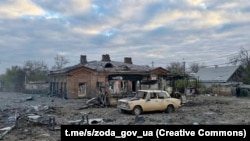
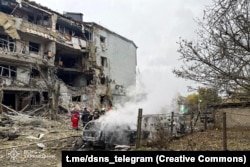
Russia hit a town in Ukraine's Zaporizhzhya region with at least 10 bombs in a "double-tap" strike on November 2, killing 26 people in what President Volodymyr Zelenskyy described as "a vile, terrorist strike" that targeted a school where humanitarian aid was being distributed to residents.
Zelenskyy said the settlement of Komyshuvakha, which lies between the city of Zaporizhzhya and the front line in the southeastern region, had been hit by bombs several times since morning.
"After the first aerial bomb strike, there was a double-tap strike with nine more bombs, specifically targeting the shelter where people were taking cover," Zelenskyy said in a post on X that included footage of smoking ruins. He said rescuers were continuing to search for people.
Four of the dead were police officers and two were rescue workers, the State Emergency Service said in a Telegram post. It said five people remain hospitalized.
"The Russians could not have been unaware that every week, local residents who had remained in Komyshuvakha received humanitarian aid at that very location. And this is further proof that Russia wants no de-escalation and no real justice," Zelenskyy said.
'We Escaped Hell': Oleshky Residents Reach Ukraine After Years In War-Torn City
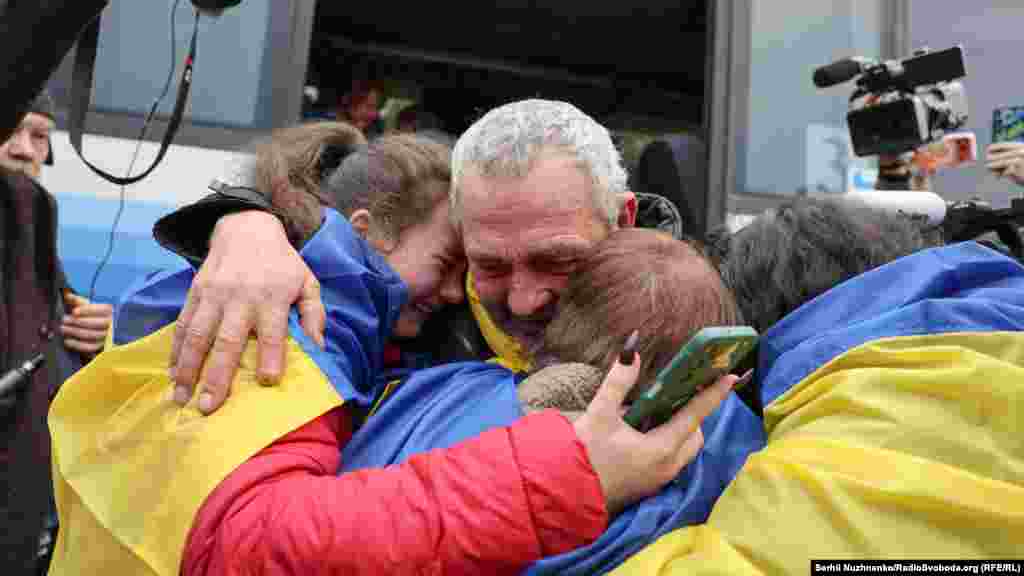


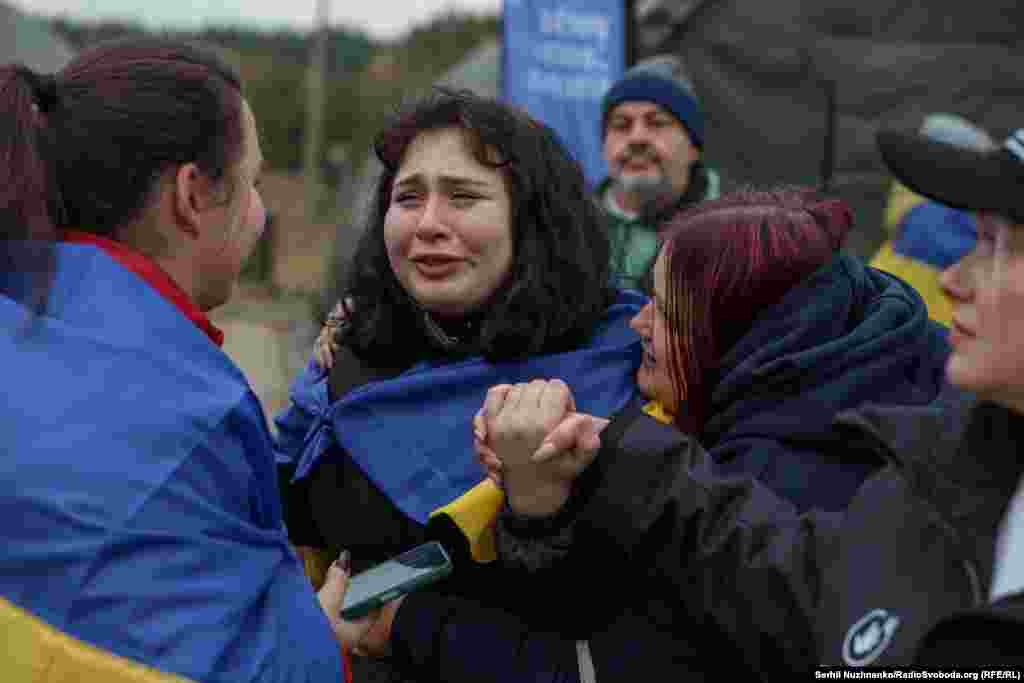


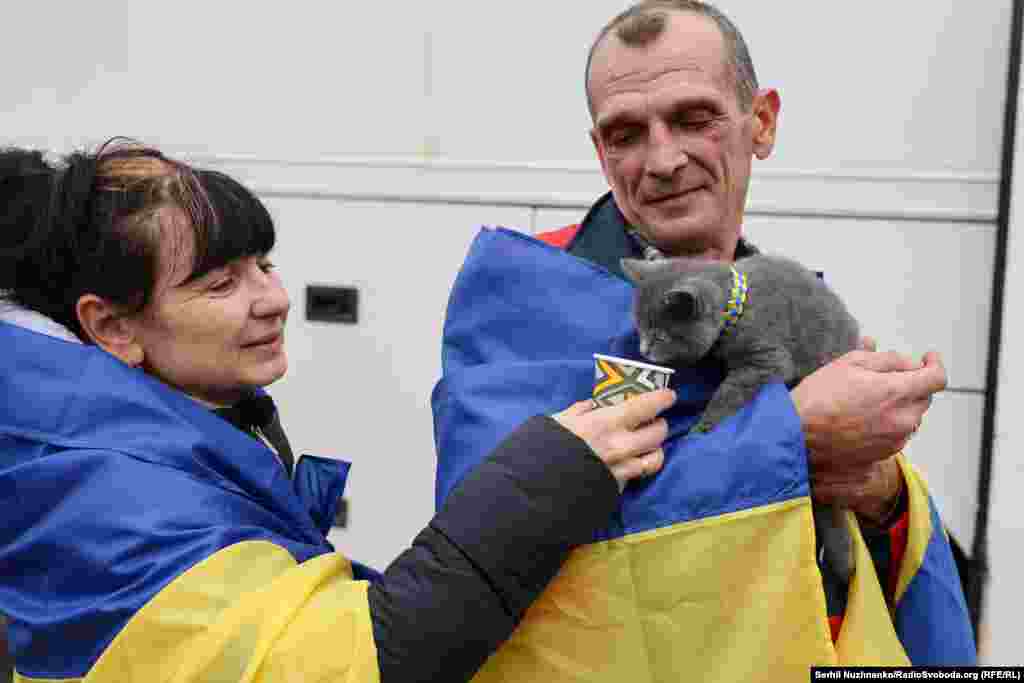


He said that after a successful US-brokered humanitarian operation that enabled residents of the Russian-occupied southern city of Oleshky to receive aid and evacuate if they wished, "there was a moment when the next steps could have shown that progress toward peace was possible. With these killings, Russia is sending an entirely opposite signal: Russia is counting on more killings."
There was no immediate comment from Russian officials.
Russia claims it does not target civilians, but the UN's Independent International Commission of Inquiry on Ukraine said last week that Russian authorities had committed war crimes and crimes against humanity by attacking civilians and critical energy infrastructure.
Ukrainian officials reported several other Russian attacks on November 2, including one that killed a man in the Sumy region and one that injured 19 people in the Kharkiv region.
Russia launched a full-scale invasion of Ukraine in February 2022. US President Donald Trump made ending the war a priority when he took office for his second term in January 2025, and trilateral US-Ukraine-Russia talks that had been dormant since last winter are expected to resume this month.
In a separate post on Novemmber 2, Zelenskyy said Ukraine had intelligence indicating Russia was preparing for a "new massive attack" targeting mainly energy and logistics.
"We need signals from the world to Russia that will make them feel that terror is no good, that it will bring no gains, and that as long as this war continues, their oil will burn, and they will not be able to make money doing business with the world.... We must put pressure on Russia in such a way that it has no alternative but to end this war. America can do this," he said.
On November 1, Zelenskyy said his country would cease strikes on Russian oil refineries -- as demanded by Trump -- if the United States quickly provides Kyiv with Patriot air defense missiles.
Zelenskyy, in an interview with Fox News in Kyiv, said he had conducted "different and several" discussions with the US president and his aides on the matter.
"We [said] we can't not respond after Russia's attack on our energy [facilities], after Russia is killing our people, attacks on our electricity, gas, refineries, on everything," he said, speaking in English.
"We said that if you want us not to attack Russia's refineries, they have not to attack our energy system. Another alternative: Give us Patriot missiles. We will find money; [it's] not just aid.... We will pay for it."
Zelenskyy said if Washington provided the missile systems for one month, Ukraine would cease attacks on Russian refineries for the same amount of time.
Patriots Could Take 'Several Years'
The US State Department on October 30 announced the approval of a sale of Patriot air defense interceptors to Ukraine worth $2.1 billion to strengthen Kyiv's defenses against increasing Russian aerial attacks.
Zelenskyy, however, has warned that it could take "several years" for the 500 missile interceptors to arrive.

Zelenskyy wrote in a social media post that "500 PAC-3 interceptors is a substantial number" and could form an effective defense package this winter, but he added that "deliveries may begin only in a few years."
"We are asking our American partners to find a solution for the time when there is a real danger and a real need to use PAC-3 interceptors," the Ukrainian president said.
Alex Plitsas, a nonresident senior fellow at the Atlantic Council and a former Pentagon official, said the Patriots announcement was significant but would not address Ukraine's immediate needs.
He said Russia's continued attacks on energy infrastructure were aimed at terrorizing civilians and forcing Ukraine to capitulate by freezing its population during winter.
The US-designed Patriot PAC-3 interceptor is one of the few Western weapons capable of shooting down the ballistic missiles Russia has been firing at Ukrainian cities.
Trump is facing political headwinds over high gas prices in the US ahead of the November 3 elections in which Democrats are seeking to win control of both houses of Congress from his REpublican Party.
Russia has resisted calls for a partial or total cease-fire, saying fighting would stop when a comprehensive peace deal is reached. It has stepped up strikes on Ukraine's energy infrastructure, along with attacks on civilian sites, as the potentially brutal winter months approach.

Kyiv has retaliated against Russian energy infrastructure that it says is used to fuel its war on Ukraine. Energy shortages and long lines at gas stations have been reported across Russia at various times in recent months.
The truce in and around Oleshky ended late on November 1 after Moscow refused the offer of an extension, Ukrainian officials said.
Ukraine's General Staff claimed on November 2 that Russian forces used the cease-fire in Oleshky to reinforce their positions, rotate troops, and deliver additional ammunition.
Kremlin spokesman Dmitry Peskov referred questions about Kyiv's allegations to the Russian Defense Ministry but suggested Ukrainian troops had also used the cease-fire to regroup, calling it "standard practice."
British broadcaster Sky News reported that a Ukrainian unit had granted its team exclusive access to its drone reconnaissance command center in southern Ukraine, providing a real-time view of their long-range drone footage.
The footage showed Russian troops deploying heavy military equipment and delivering supplies during the cease-fire in Russian-occupied territory in and around Oleshky, Sky News reported.
"Before, they wouldn't even dream of traveling along the road, day or night, in bad weather or under any other conditions. Now they have the opportunity to do so," a Ukrainian military officer told the broadcaster.
Russia resumed attacks on Ukraine's Kherson region following the end of the local cease-fire, Kyiv said on November 2. Oleshky sits across the Dnieper River from the Ukrainian-controlled regional capital, Kherson.
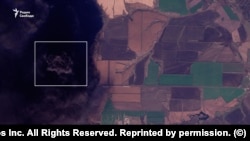
In Russia, an apparent drone strike hit an oil pumping station in the Samara region, sending up plumes of thick smoke visible from 10 kilometers away, according to satellite imagery. The Samara facility is a key hub, receiving oil from several pipelines and sending on westward.
The Ukrainian military has not commented on the attacks.
Signs Of Cyberwar?
Meanwhile, there were signs of a potential cyberwar heating up between the two countries, although details remained scarce.
Ukraine's air force on November 1 said it suspected the country's air raid alert system had been hacked but that systems had been restored to normal.
Separately, Russia's Emergency Situations Ministry early on November 2 said a cyberattack on its online app caused false information to be spread to the public.
There was no indication of the two incidents being linked, but Russian websites in recent days have reported multiple cyberattacks.