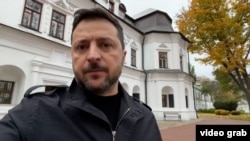
The US State Department has announced the approval of a critically needed sale of Patriot air defense interceptors to Ukraine worth $2.1 billion to strengthen Kyiv’s defenses against increasing Russian aerial attacks that have been targeting civilian populated areas and infrastructure over the past few months.
Ukrainian President Volodymyr Zelenskyy, however, warned that the 500 missile interceptors could take “several years” to arrive.
Welcoming the US State Department’s move as a “strong decision,” Zelenskyy wrote in a social media post that “500 PAC-3 interceptors is a substantial number” and could form an effective defense package this winter, but noted that “deliveries may begin only in a few years.”
“We are asking our American partners to find a solution for the time when there is a real danger and a real need to use PAC-3 interceptors,” the Ukrainian president said while noting that that his country’s energy infrastructure is under Russian attacks.

The State Department said that the proposed sale of the missile interceptors, being purchased with funds from Canada, Germany, and Norway, will support the foreign policy and national-security objectives of the United States “by improving the security of a partner country that is a force for political and economic stability in Europe.”
The announcement of the proposed sale came after Zelenskyy repeated his calls on October 30, asking the United States to speed up the release of the interceptors, which are seen as the most effective weapon against the ballistic missile attacks from Russia.
In September, the European Commission approved 6.1 billion euros ($6.82 billion) in defense procurement for Ukraine.
This amount also included the purchase of US PAC-3 Patriot missile interceptors under special exception to EU rules. The European Commission did not specify how much money was allocated for these interceptors, citing operational security considerations.
At a closed-door meeting of the European Council in October, Zelenskyy told the participants how many Patriot interceptor missiles Ukraine would need to get through the winter.
Evacuation From Oleshky Completed
Meanwhile, evacuation of residents from the Russian-occupied southern Ukrainian city of Oleshky had been completed as Moscow and Kyiv continued to stick to the temporary cease-fire brokered by US first lady Melania Trump.
Buses filled with civilians left the area for the first time in more than four years without any incident. The cease-fire is set to remain in effect until November 1.
Russian human rights ombudswoman Yana Lantratova said in a social media post on October 30 that after arriving in Ukraine's Russia-occupied Crimea, one convoy of buses then headed toward Russia, while a second convoy was bound for Ukraine.
"We are concluding our humanitarian mission in Oleshky. We are currently in the territory of Armyansk (in northern Crimea)," she said in a video posted on Telegram, adding that both sides had praised the high standard of its organization.
Zelenskyy later said those residents of Oleshky who wished to travel to Ukraine have crossed into the country on October 31, thanking the United States and Melania Trump for their mediation.
"When the world pays attention, people are rescued. Further steps toward de-escalation and real progress toward peace are also needed," he wrote.


Hundreds of Oleshky residents were expected to return to Ukrainian-controlled territory via a roundabout route: after reaching Anapa in southern Russia, the civilians were to be flown to the Belarusian city of Homel and from there transported by bus into Ukraine's northern Chernihiv region.
The circuitous route was needed to avoid roads along front lines that have been heavily mined and destroyed by the conflict, sparked by Russia's full-scale invasion of Ukraine in February 2022.
Ukraine Targets Key Russian Facility
As the evacuation from the war-torn city was unfolding on October 30, the Kremlin said the temporary cease-fire there should not be extrapolated to the broader peace settlement process in Ukraine.
Moscow has repeatedly said it was not seeking a partial easing of the conflict, urging a complete resolution that would include its demands, including full control over Ukrainian territories that Russian forces have been unable to seize on the battlefield.
Separately, Russia has intensified its airstrike campaign aimed at pressuring Kyiv into accepting its conditions for peace by attacking the country's energy and civilian infrastructure and leaving thousands without heat or electricity amid cold weather.
This year, however, the Ukrainian military has been increasingly responding to the attacks with campaigns of its own, targeting energy and military infrastructure inside Russia with long-range drone strikes.

On October 31, the Ukrainian military claimed that it had targeted the Russian state-owned Kombinat Kamensky chemical and defense enterprise in the Rostov region, using both drones and Neptune coastal missile systems.
It said that a “fire at a finished-products warehouse has been confirmed,” with damage reported to four production workshops, adding that the facility manufactures solid rocket propellant for ammunition used by multiple Russian missile systems.
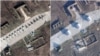
The Rostov region, which borders Ukraine, is a strategically important industrial and logistics hub in southwestern Russia. Earlier in the month, Reuters reported that Russia had nearly finished building a major new base for launching jet-powered drones there in just six weeks.
Citing satellite imagery, the report said the site had been an empty field as of the end of August and had become a complex facility covering an area equivalent to around 126 soccer fields by mid-October.
Rostov has been under Ukrainian aerial attacks since September. The Ukrainian Security Service had earlier claimed to have targeted a number of “Russian aerial assets” in a special operation at a military airfield in the regional capital, Rostov-on-Don.
Meanwhile, Zelenskyy announced his arrival in Istanbul for what he described as “important talks” with the Turkish President Recep Tayyip Erdogan.
“We are working to strengthen the protection of our people, interstate partnership with Türkiye, and tangible diplomatic prospects,” Zelenskyy said in a social media post.
In an effort to revive diplomatic negotiations between Ukraine, Russia, and the United States to end Moscow's long-running invasion, the Ukrainian president added that issues concerning navigation in the Black Sea were on the agenda in Istanbul.
Earlier this week, Zelenskyy had expressed hope that a trilateral meeting between Ukrainian, Russian, and US negotiators would take place in Abu Dhabi between November 6 and November 10, adding that Kyiv also wanted Europe to be involved in the talks on how to end the war.